Japanese-style tattoos in Beaumont, TX
Koi, dragons, peonies, waves and wind — traditional Japanese motifs designed to flow with the body, from standalone pieces to multi-session work.
A tradition built on flow
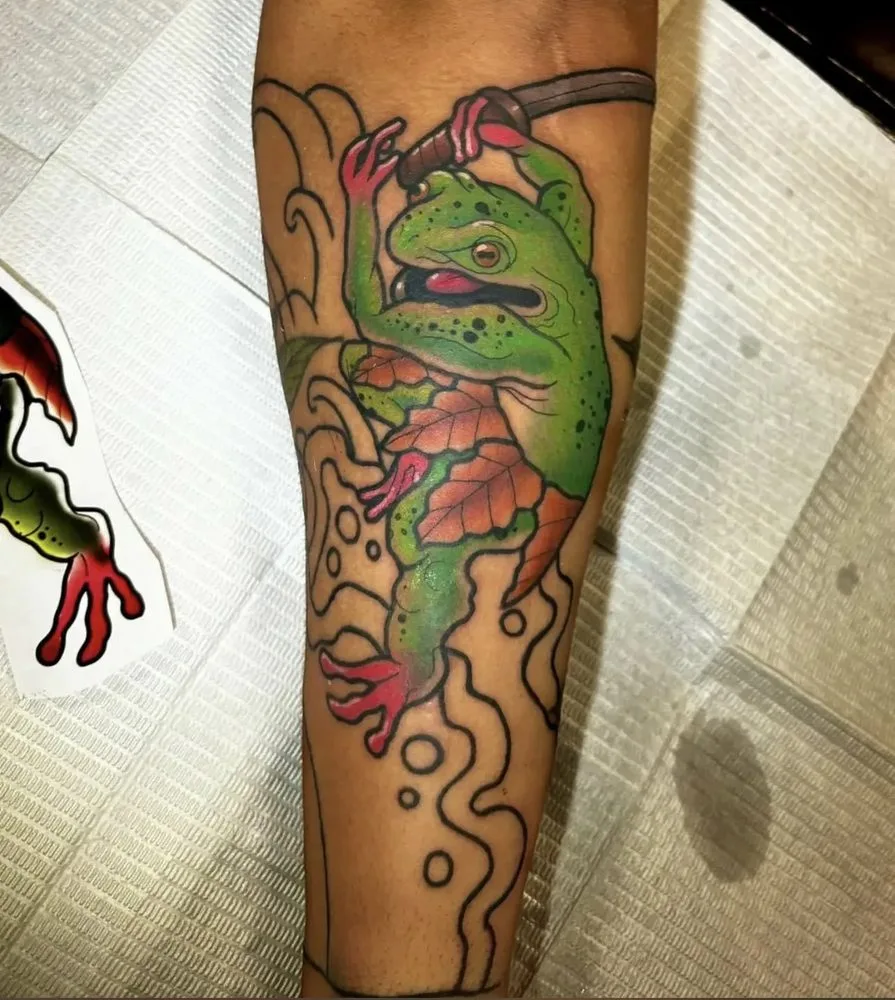
Japanese tattooing — irezumi — is one of the oldest continuous tattoo traditions in the world, and it solves a problem most styles ignore: how a design lives on a moving body. Waves, wind bars and clouds aren't just background; they're the current that carries the main subject across muscle and around joints, so the piece reads as one composition whether your arm is raised, bent or at rest.
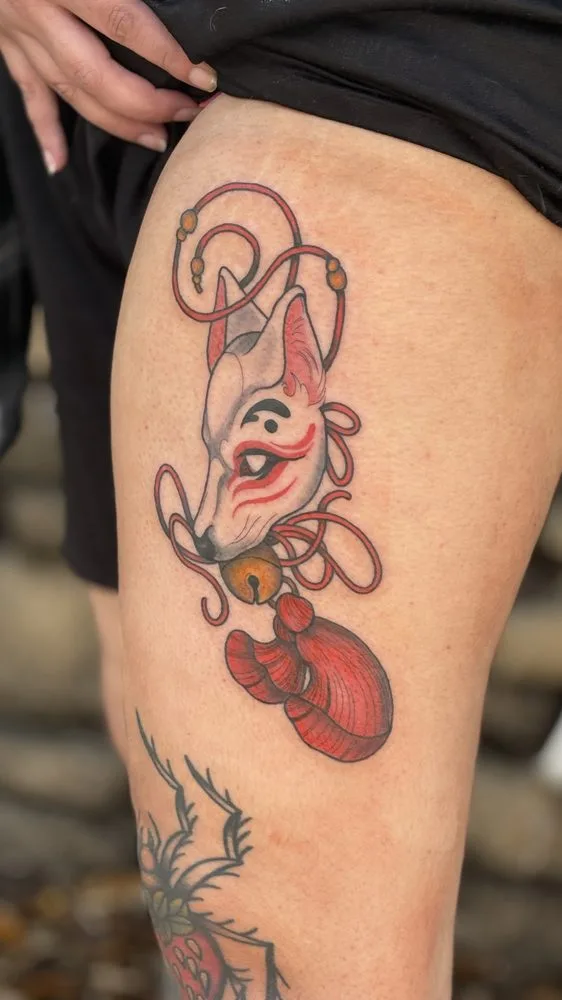
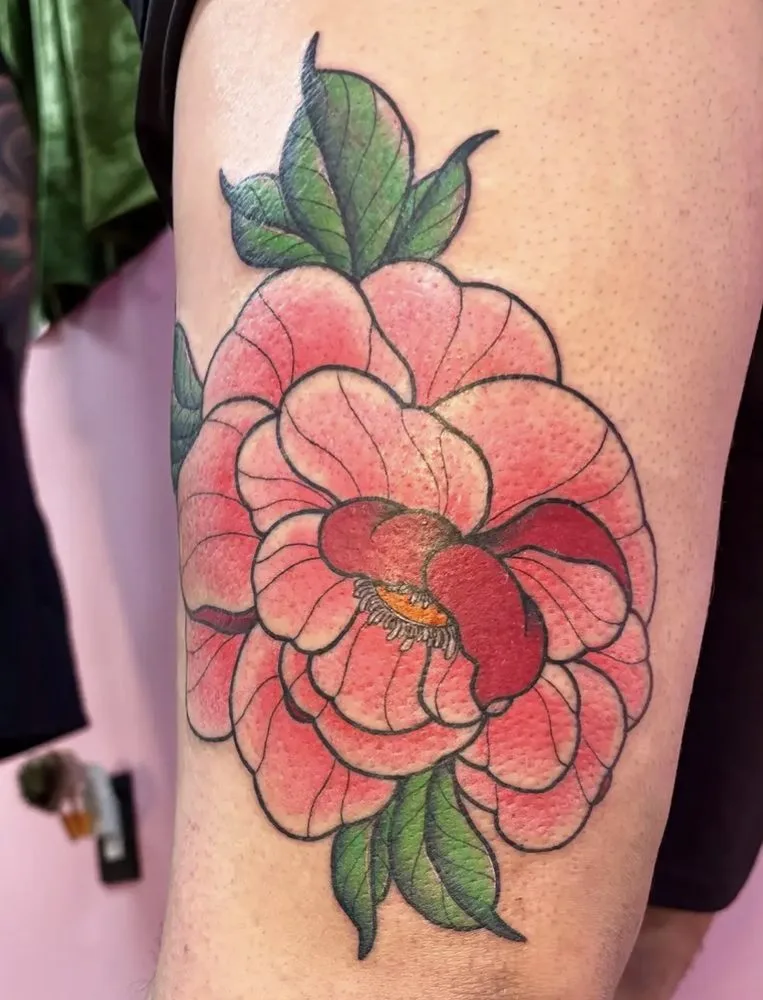
That's what draws me to the style, and it's the standard I hold my Japanese work to. A kitsune mask, a blooming peony, a koi cutting upstream — each drawn with the bold outlines and deliberate negative space the tradition demands, then composed for the exact place on your body where it will live.
Motifs and meaning
Japanese imagery carries centuries of story. Koi stand for perseverance — the carp that climbs the waterfall. Peonies are prosperity and quiet courage. Dragons are protectors, not monsters. Kitsune masks carry the fox spirit's mischief and wisdom. Part of the consultation is finding the imagery whose story fits the one you're telling — and making sure the composition honors it.
From single piece to sleeve
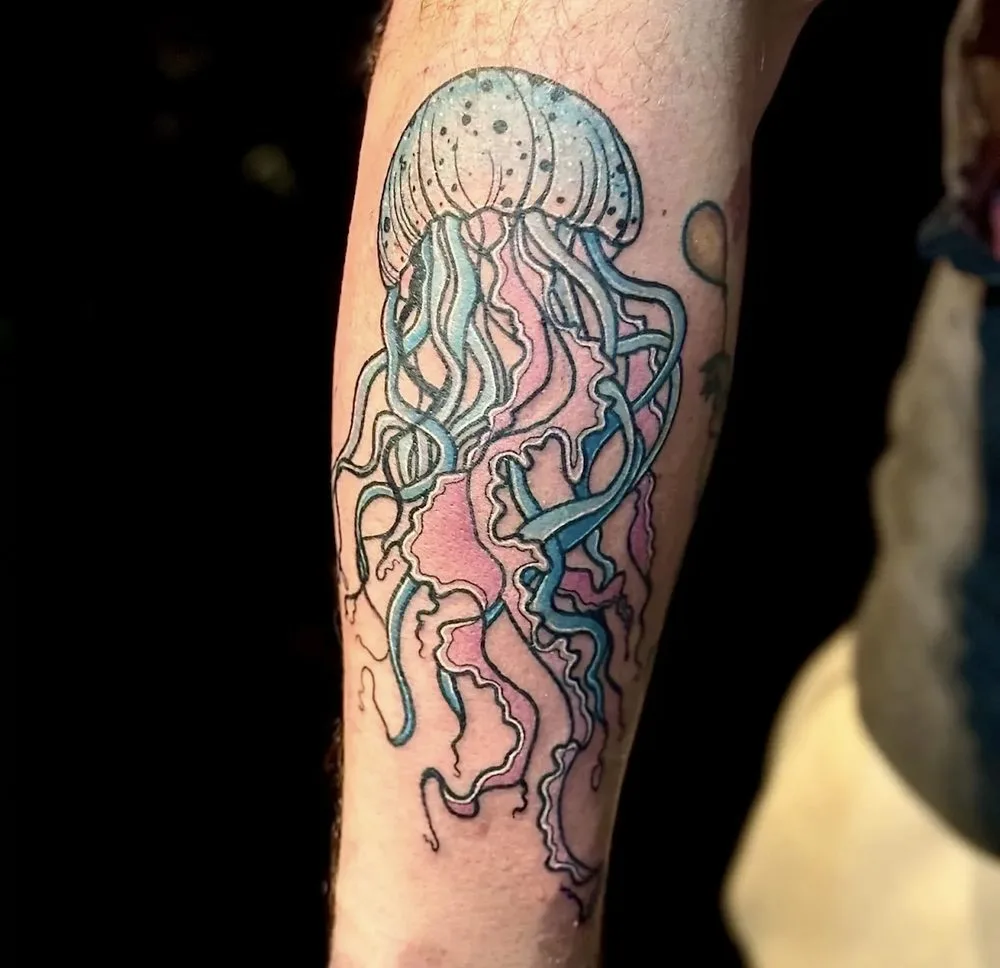
You don't need to start with a sleeve. Plenty of my Japanese work is standalone — a mask, a single flower, a jellyfish drifting in soft color. But if you're thinking bigger, this is the style built for it: half sleeves, full sleeves and panels planned across sessions, each stage complete on its own while leaving room for the next. We map that plan together at your free consultation.
What moves the price
- Scale — a standalone motif is one session; sleeves and panels are a planned series.
- Background density — waves, wind and clouds add richness and time.
- Color vs. black-and-grey — full color builds take additional passes.
Exact quote at your free consultation — at the studio inside Sola Salon Studios on 6530 Delaware St Suite 35, Beaumont.
Pieces in this style.
Japanese-style questions
What subjects belong in Japanese-style tattooing?
The traditional vocabulary includes koi, dragons, tigers, kitsune (fox masks), hannya masks, peonies, chrysanthemums, cherry blossoms, waves, wind bars and clouds. Each motif carries meaning, and part of the design conversation is picking imagery whose story fits yours.
Do I have to commit to a full sleeve?
No. Japanese style scales — a single peony or a kitsune mask works beautifully as a standalone piece. That said, the style shines at larger scale, and if you think you might expand later, we can compose your first piece so a sleeve or panel can grow around it naturally.
How many sessions does a Japanese piece take?
A standalone piece is often one session. Larger work — half sleeves, full sleeves, back panels — is planned across multiple sessions with healing time between them. At your consultation you get a session plan and a quote up front, so you know the road before we start.
Is there a Japanese tattoo specialist in Beaumont?
Beaumont has talented all-around shops, but Japanese-style work is a focused discipline — flow, background elements and body placement follow their own rules. It is one of the two styles my practice is built on, and I design every Japanese piece to move with the body the way the tradition intends.
Start the conversation.
Free consultation — whether it's a single peony or the first stage of a sleeve.